
The Rhinomax DNA: Australian Made Off Road Campers Engineered to Survive
There is a moment, usually somewhere past the bitumen, when the story of a camper becomes obvious.
It is not when the brochure is glossy, or the interior looks sharp under showroom lights. It is when the road turns into corrugations, when the chassis starts cycling through its range, when dust pressure builds and every joint, fastener, and seal is asked a simple question: were you designed for this, or are you merely coping?
A lot of products in our industry are sold as “off-road” because they have aggressive tyres, a lifted stance, and a few tough photos taken on a dirt track. Underneath that, many are still built using old world methods: timber frames, mechanical joins, rivets, and sealant. It is a construction style that can work well for touring on sealed roads and maintained gravel. The problem is that corrugations, twist, and heat cycles do not care about marketing language.
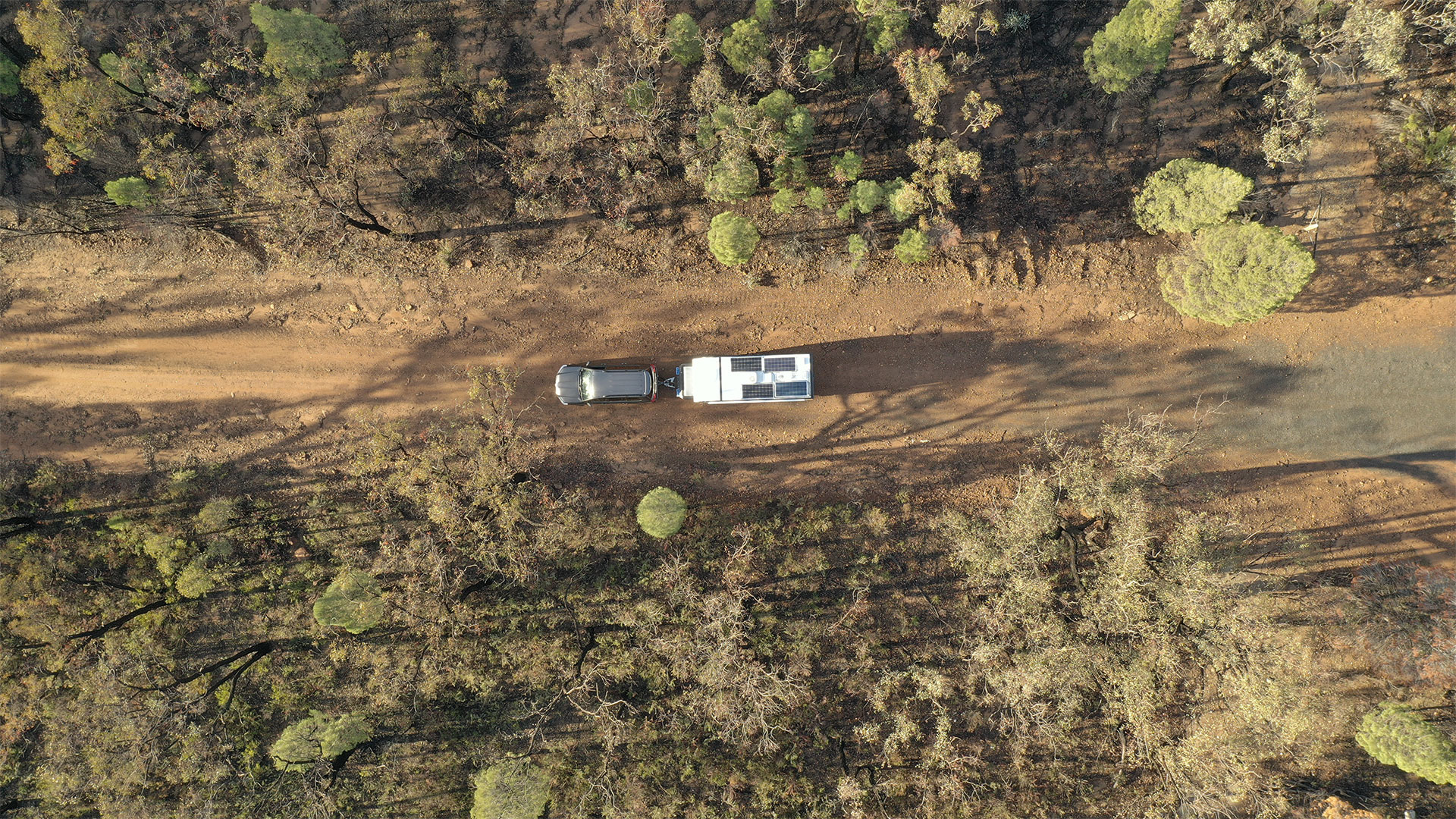
Rhinomax exists because we refuse to treat harsh Australian travel as a styling exercise. We are not a caravan manufacturer that dabbles in off-road. We approach the product as an engineering firm would: an off-road habitat designed from the ground up as a cohesive machine. Structural integrity comes first, because once you compromise the structure, everything else becomes maintenance.
If you have ever wondered why one camper still feels tight after years of rough tracks, while another starts to rattle, leak, and fatigue, this is where the answer lives.
1) The Monocoque Philosophy
Most traditional campers rely on a separate frame and body construction. The body is often built like a house: timber framing, sheet cladding, then trims and sealants to keep the weather out. It is sometimes called “stick and tin”, and in a controlled environment it can be perfectly serviceable. But on long stretches of corrugations or in heavy torsional loads, every join becomes a working point.
Every working point is a risk. Rivets can elongate holes. Sealant can crack. Fasteners can loosen. And once micro-movement starts, it tends to grow.
A monocoque structure takes a different approach. Rather than building a body on a frame, the body itself is the structure. A full composite monocoque is designed as a single, integrated shell. Instead of relying on hundreds of joints to share the load, the load is carried through the composite structure.
The benefit is not theoretical. It is practical and measurable. A monocoque design improves torsional rigidity because the whole body resists twisting as one unit. It also reduces the reliance on mechanical joins that can shake loose over time. And, importantly for Australian conditions, it significantly improves insulation performance.
This is where thermal bridging matters. In many framed builds, the frame becomes a pathway for heat transfer. In a composite construction, you can engineer a proper thermal break so the walls, roof, and body assembly resist heat flow as a system. That translates to a meaningful R-value, not just a claim. It is the difference between a cabin that holds stable temperature and one that feels like it is constantly fighting the climate. When you are camped in the High Country in winter, or in the Pilbara in summer, “nice finishes” do not keep you comfortable. Engineering does.
2) Component Selection and the Best-of-Breed Rule
You will sometimes hear the phrase “we make everything in-house” used as a selling point. It sounds impressive, and it is easy to market. The trouble is, that approach often confuses control with competence. An expert engineer knows when to design and build, and when to integrate.
At Rhinomax we do not try to reinvent the wheel where the wheel is already world-class. We select best-of-breed components from proven specialists and integrate them properly into the total system. That is not a shortcut. It is a sign of maturity.

Suspension is a good example. We use Cruisemaster because they are a leader in Australian off-road suspension systems, with a service network across the country. If you are travelling regionally, serviceability is not a nice-to-have, it is a requirement. Real confidence is not just making it through a track, it is knowing you can be supported if something happens hundreds of kilometres from home.
The same logic applies to power. Victron components are widely respected for reliability, performance, and global support. A serious electrical system is not defined by the size of the battery alone. It is defined by system design, monitoring, integration, and resilience. You want equipment that is proven, supported, and understood by technicians, not a private-label knock-off that looks similar on a spec sheet.
3) The Narrow Track Advantage
There is a design decision that looks simple on paper, yet changes the entire experience of towing off-road: matching the camper’s width to the tow vehicle. A wider trailer might offer more internal floor space, but it comes with compromises that show up in the real world.
First, aerodynamics. A camper that sits outside the tow vehicle’s profile increases drag. More drag means more fuel consumption and more load on the tow vehicle. Second, line-tracking. When you are weaving through bush tracks, the tow vehicle defines the safe line. If the car fits, the camper should fit. A narrower unit follows the vehicle’s path more faithfully. Third, stability. A camper that tracks cleanly is easier to place and easier to correct when conditions change quickly.
4) Weight Distribution as a Safety Feature
If there is one area where marketing language can become genuinely dangerous, it is weight. At Rhinomax, weight distribution is engineered in CAD from the beginning. Heavy components, such as water and batteries, must be placed low and positioned correctly relative to the axle. This is not just a packaging decision. It is chassis dynamics.
Poor weight placement increases the likelihood of sway and instability. At highway speeds, small inputs can build into oscillation, especially in wind or during evasive manoeuvres. This is where pedigree matters. Our head engineer’s background in Rolls-Royce aerospace engineering is not a slogan, it is a mindset: systems thinking and a refusal to ignore small factors that become big ones under load.
Setting the Standard for Australian Made Off Road Campers
The most common compromise in this industry is pretending that “off-road capable” is a styling package. Bigger tyres, a lift, and an adventurous name do not create torsional rigidity. They do not solve thermal bridging.
Rhinomax is built on a different idea: that an off-road camper should be designed as a complete system. Composite monocoque construction. Best-of-breed components. Narrow track geometry. CAD-designed weight distribution. When those decisions are made early, and executed properly, you feel it every time you tow.

Your Off-Road Camper Audit Next Time You Shop
Next time you look at a camper, ask the salesperson about the R-value of the walls and the thermal bridging strategy. Ask about the torsional rigidity of the chassis. Ask how the water and battery mass is positioned for yaw control and highway stability. Ask what happens if you need parts and service away from the city.
If they cannot answer, you are looking at a caravan, not a Rhinomax.